Plant Phenomics, Precision and Digital Ag
Research scientist with over 13 years of experience in designing, managing, and delivering interdisciplinary research projects in the agriculture and agri-food sector. Specialized in experimental design, advanced statistical and machine learning modelling, large-scale data analytics, and scientific visualization. Developed innovative computer vision and digital phenotyping systems to quantify crop traits and assess seed and grain quality, supporting data-driven decision-making in modern crop production and breeding programs.

Full-stack, AI/ML, Big Data
Full-stack technology professional experienced in designing and developing cross-platform web and mobile applications and scalable data platforms for digital agriculture and scientific computing. Developed mobile and user-interface applications using Flutter and modern web technologies, and built robust backend services and APIs using Python frameworks such as Django and FastAPI. Experienced in deploying machine learning and data processing pipelines on cloud and high-performance computing environments, including AWS and Red Hat OpenShift, with strong emphasis on containerization, workflow automation, and distributed data management. Skilled in integrating IoT sensing systems, real-time data acquisition pipelines, and big-data storage solutions to enable data-driven analytics, decision support, and AI-enabled agricultural applications.

Experimental Design, Statistical Modelling and Advanced Analytics
Data scientist with extensive experience in designing statistically robust field and controlled-environment experiments for agricultural and plant phenomics research. Developed and implemented predictive and inferential models to analyze high-dimensional phenomics, genomics, environmental, and management datasets. Proficient in large-scale data processing, feature engineering, and model development using Python and R, including machine learning and deep learning approaches for crop trait prediction and decision support. Experienced in handling computationally intensive workflows on high-performance computing platforms and in developing reproducible data analysis pipelines, visualization frameworks, and data-driven insights to support crop improvement and digital agriculture initiatives.
Industrial Automation, Control Systems and Instrumentation
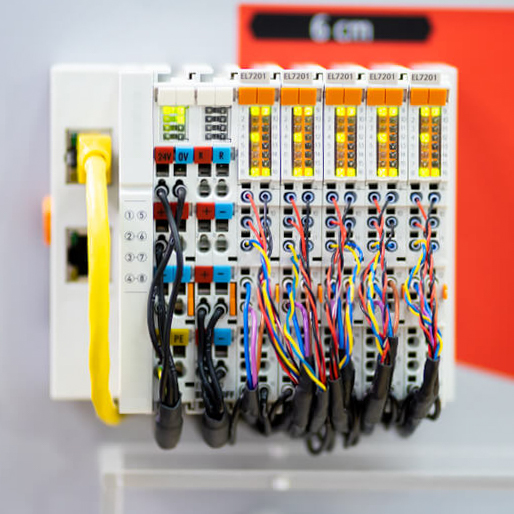
Professional electrical engineer with experience in industrial automation and process control system design within the agriculture and agri-food sector. Designed, configured, and commissioned automation solutions using programmable logic controllers (PLC) and distributed control systems (DCS) for dairy processing facilities, greenhouse operations, and food manufacturing environments. Involved in system integration, instrumentation selection, control panel design, field wiring supervision, and process optimization to improve operational reliability and efficiency. Experienced in troubleshooting automation systems, developing human–machine interface (HMI) applications, and implementing data acquisition and monitoring solutions to support energy management and smart farming initiatives.
Corteva Agriscience, Hyderabad, India | Jun 2019- Dec 2019
Yokogawa India Ltd. Chennai, India | Dec 2008 - Dec 2009
Rice blast, caused by the fungus Magnaporthe oryzae, is one of the most devastating diseases of rice, responsible for an estimated global crop loss of 4.33%. Although breeding cultivars resistant to blast is laborious, it is the most effective and sustainable way to mitigate its impact on global rice production. Breeders use the Universal Blast Nursery (UBN) to evaluate thousands of breeding lines for blast resistance in a year to make breeding decisions. These evaluations are visual and subjective making them relatively less reliable and accurate than desired for consistent and reproducible breeding decisions. This paper presents an image-based estimation of blast severity using canopy images representing the entire breeding line and deep-learning neural networks. While countless studies have reported severity estimation using single-leaf images, deploying such techniques is ineffective with canopy images from UBN. This study was conducted in two phases. In the first phase of the study, a relatively shallow model was able to classify the images into “susceptible” and “resistant” lines with an accuracy of 96.67%. Upon observing the misclassified images, higher accuracy was obtained from extracting simple feature attributes such as biomass rather than lesion and other relevant disease symptoms. A “partially susceptible” category was included in the second phase, to improve the model. Despite the reduction in accuracy, the models trained with the progressive resizing strategy were able to extract the smaller intended features. In phase two, the model achieved an accuracy of 87.78%.
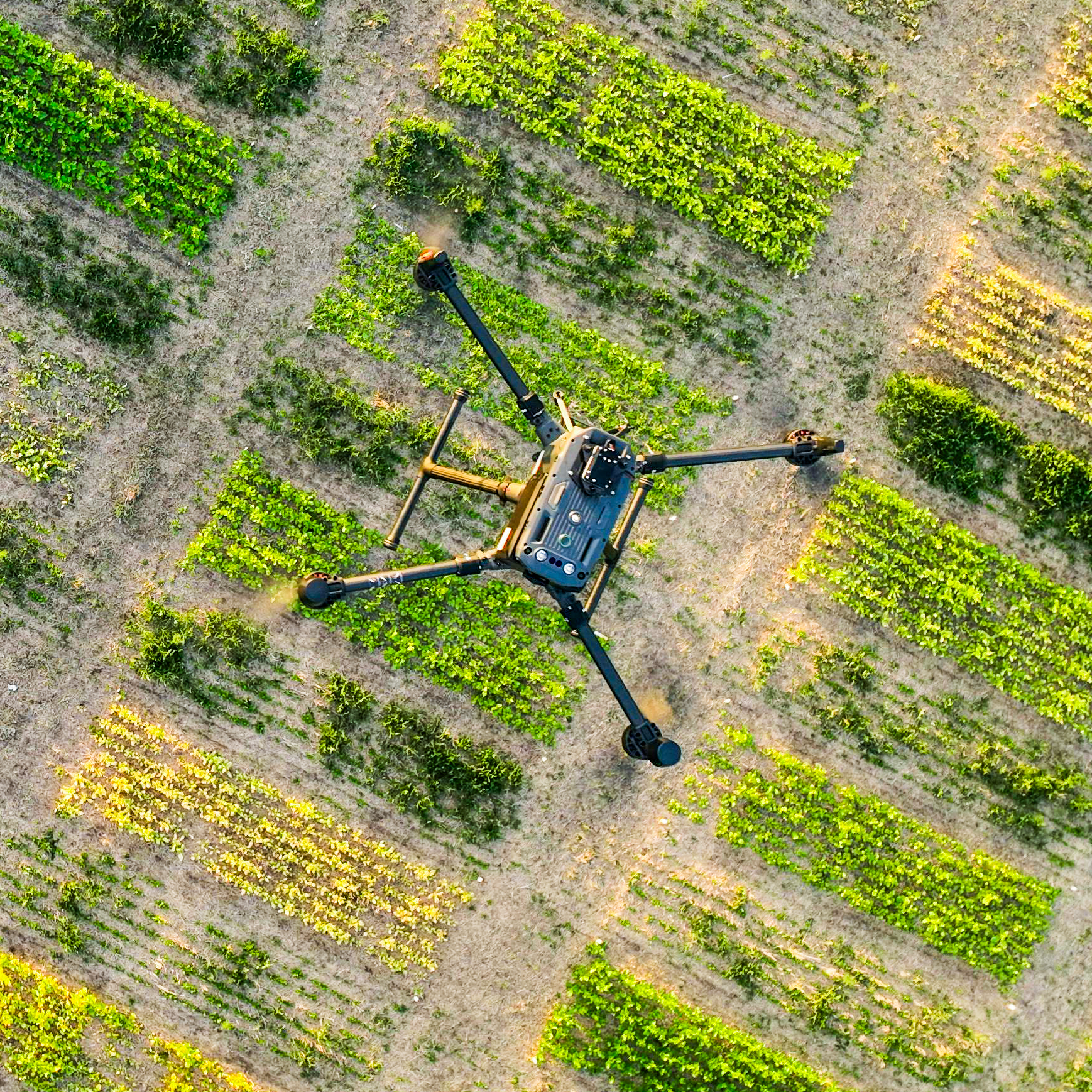
Accurate forecasting of crop maturity supports efficient harvest planning and accelerates selection decisions in breeding programs. In spring wheat, maturity is typically assessed through manual scoring late in the season, which limits its usefulness for timely harvest management and early selection decisions in breeding programs. This study evaluated uncrewed aerial vehicle (UAV)–based multispectral imagery for forecasting maturity in spring wheat grown at Lethbridge, Alberta (AB), Canada, during the 2024 and 2025 growing seasons. Thirty cultivars were monitored using seven-band UAV multispectral imagery during grain filling, enabling derivation of core vegetation and senescence-related indices from radiometrically calibrated orthomosaics. Strong correlations (|𝑟| >0.85) were observed between vegetation indices and days remaining to maturity (DRTM), motivating baseline regression models and subsequent evaluation of eleven machine-learning and deep-learning approaches. Among these, support vector regression (SVR) and multi-layer perceptron (MLP) achieved the highest predictive accuracy (𝑅2 =0.95–0.96; mean absolute error (MAE) ≈1.25 days). Deep learning models achieved performance comparable to machine-learning approaches; however, incorporating spatial information through convolutional neural networks did not improve prediction accuracy. Feature-attribution analysis identified the red, red-edge (RE), and near-infrared (NIR) spectral bands as key predictors, enabling non-destructive, early, and scalable UAV-based maturity forecasting.
Accurate phenotyping of wheat traits is essential for advancing breeding programs and crop science research. This study employs the University of Saskatchewan Field Phenotyping Systems (UFPS), an uncrewed ground vehicle (UGV), across six Canadian research stations during the 2023 and 2024 field seasons to explore LiDAR-based evaluation of plant height and lodging in spring wheat. A total of 90 plots of 30 historical wheat cultivars were planted in a Randomized Complete Block Design (RCBD), with LiDAR data collected at key growth stages. Four methods—height distribution vector, overhead projection, orthographic projection, and voxelized spatial grid—were assessed for height and lodging classification. For plant height, overhead projection (95.98%) and orthographic projection (96.05%) delivered the highest accuracy, with RMSE and MAPE at 3.7 cm and 3.55%. Voxelized spatial grid and height distribution vector methods showed lower performance, with R-squared values of 88.15% and 84.37%. For lodging, overhead projection excelled, achieving up to 0.97 Quadratic Weighted Kappa (QWK), and 98.51% Macro-F1 (MF1), especially in 2- and 3-class scenarios. The voxelized spatial grid performed well, while the height distribution vector and orthographic projection lagged with more classes. These results establish overhead projection as a robust method for high-throughput phenotyping in spring wheat.
Nitrogen (N) fertilizer is one of the essential plant nutrients optimized to enhance crop yield and quality in modern agricultural fields. The conventional practice of applying N in a single dose before planting or in a random split dose without having precise knowledge of the amount and timing of crop N requirements has led to excessive use of N fertilizers in Canadian agriculture. Excess N application is a serious environmental issue having a huge impact on greenhouse gas emissions, soil health, and water resources (Xiong, Chen et al. 2015). Optimal N utilization is critical to maximize yield and mitigate the environmental impacts of run-offs from agricultural fields (Yang, Du et al. 2020, Jiang, Zhu et al. 2021). Leaf N content is an important indicator of photosynthetic efficiency (Jung, Song et al. 2021). It could assist agriculturists in better managing N applications at the early vegetation stages, that impact the yield in the later stages of the potato growth cycle.
In this study, a commercial potato cultivar, Russet Burbank was grown to generate a prediction model on in-season N fertilizer application based on actual crop N requirements. We estimated the leaf nitrogen content with machine-learning models using spectral data obtained from SpectraVue leaf spectrometer. The treatments include an untreated control with nitrogen applied at five different rates (47.5, 95, 142.5, 190, and 237.5 kg/ha-1). The leaf spectral profiles (360 – 1100 nm) were obtained at the vegetative, tuber initiation, and maturity stages. Right after the spectral profiles were acquired, the leaves were sampled to obtain the leaf nitrogen content using Partial least squares regression models were developed to estimate the leaf N content from the spectral profiles. The developed models were able to estimate leaf N content with an R2 (coefficient of determination) of 78.6%. Increasing the number of observations could minimize the error and further improve the prediction accuracy.
Timely harvest is important with lentils, especially since harvest timing is a compromise between increasing yield from younger pods and losses due to shattering of mature pods (Singh et al. 2020). Chemical desiccation has been proven to be very effective for lentils (Zhang, Johnson, and Willenborg 2016). Since chemical desiccation has an immediate dry-down effect, it is essential to ensure the crops are at maturity. Application of desiccation early would reduce the seed size and yield of the lentil crop.
Multispectral imaging has been used as a promising alternative for herbicide tolerance studies (Duddu et al. 2019; Singh et al. 2020). In this study, we used UAV multispectral imaging to estimate plant moisture to determine the optimal window for desiccation. In addition, following application of the desiccant, dry-down efficiency was assessed through visual ratings of the five conventional and two organic desiccants.